
Rocky soil can turn a “simple fence project” into a brutal weekend faster than almost anything else.
A lot of homeowners assume digging fence post holes is basically just dirt work. Then they hit granite, fieldstone, buried rock shelves, tree roots, or compacted clay mixed with stone — and suddenly the auger is bouncing around like a jackhammer rodeo.
I’ve worked around rocky terrain where one fence post took 20 minutes… and another hole five feet away took nearly two hours. That’s the reality of fencing in foothill terrain, hillside lots, and rocky ground conditions.
The good news is that rocky soil does not mean your fence project is doomed. In fact, some rocky ground creates incredibly stable fence foundations once you use the right techniques.
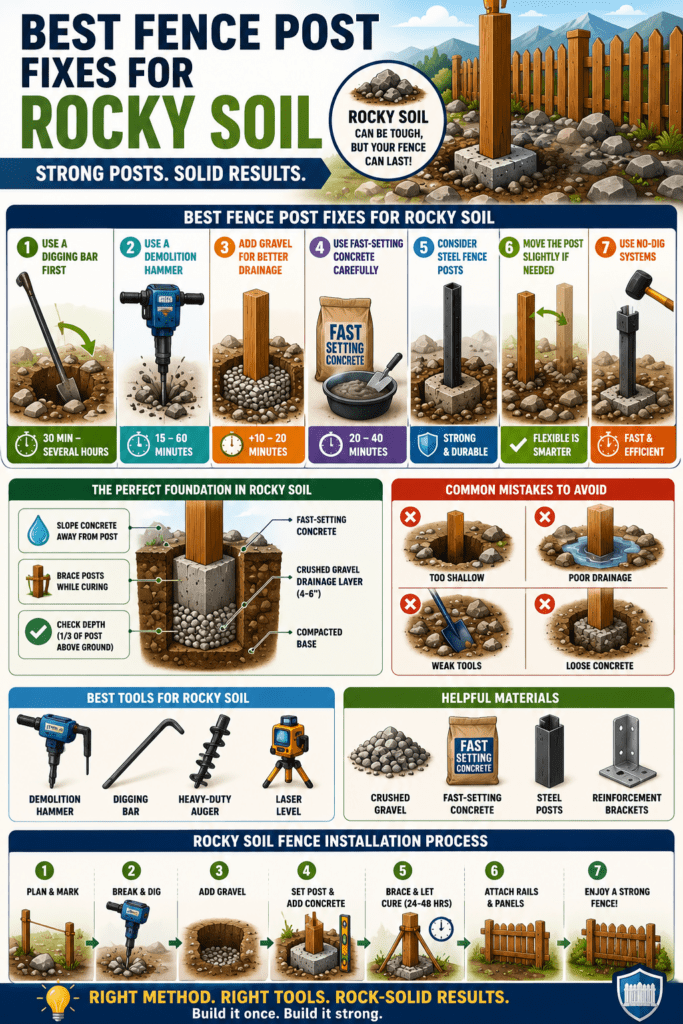
The key is choosing the correct repair or installation method instead of fighting the soil with the wrong tools.
Why Rocky Soil Is So Difficult for Fence Posts
Rocky soil creates three major problems:
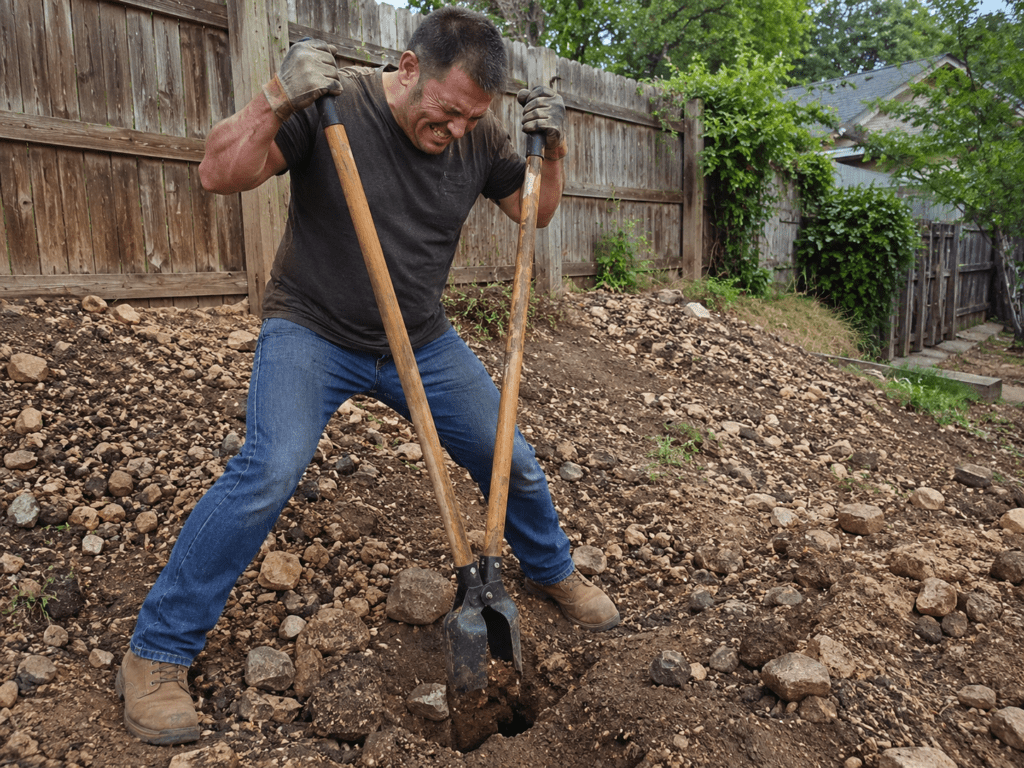
1. Digging Becomes Extremely Slow
Standard post hole diggers often become nearly useless once large rocks appear.
2. Proper Depth Is Harder to Achieve
Fence posts need adequate depth for wind resistance and long-term stability. Rocky ground can block proper hole depth entirely.
3. Concrete Placement Gets Complicated
Uneven rock surfaces create gaps, drainage problems, and awkward footing shapes. That’s why rocky soil fence repairs often require different strategies than standard suburban fence installations.
Best Fence Post Fixes for Rocky Soil
Here are the methods that consistently work best in difficult rocky conditions.
1. Use a Digging Bar Before an Auger
One of the biggest mistakes people make is starting with a rented auger immediately.
In rocky soil, augers frequently:
- Jam on rocks
- Bounce violently
- Get stuck
- Create uneven holes
A heavy digging bar or spud bar is often more effective at first.
Best Use Case
- Small to medium rocks
- Compact foothill soil
- Clay mixed with stone
Time to Complete
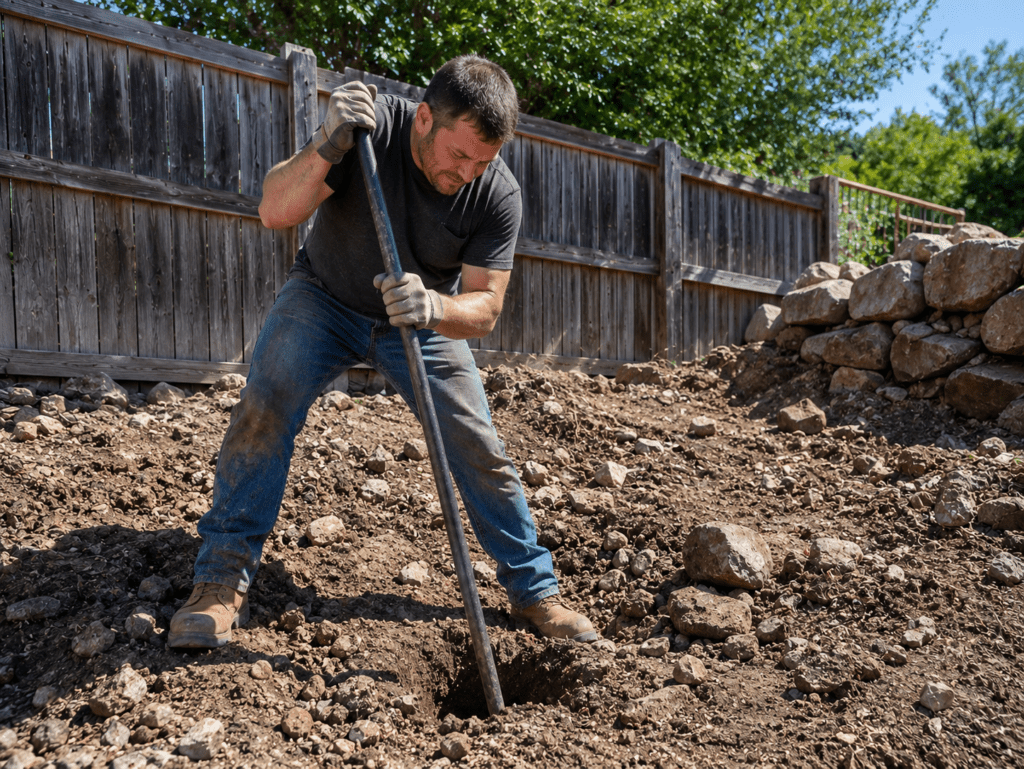
- 30 minutes to several hours per hole
A digging bar lets you:
- Loosen rocks manually
- Pry out buried stones
- Break compacted sections
Many fence installers use augers only after pre-breaking the rocky layer. Reddit fence builders frequently mention combining digging bars, jackhammers, and augers for difficult terrain.
2. Rent a Demolition Hammer or Jackhammer
If you hit solid rock shelves, a jackhammer becomes one of the best investments you can make.
Trying to force through solid rock manually can waste an entire weekend.
Best Use Case
- Granite shelves
- Hardpan
- Large embedded rocks
- Extremely compacted terrain
Time to Complete
- 15–60 minutes per difficult rock obstruction
In many cases, breaking the rock is faster than trying to remove it completely.
This is especially true for:
- Hillside properties
- Foothill neighborhoods
- Older compacted lots
For related repair ideas, see:
3. Use Gravel for Drainage at the Base
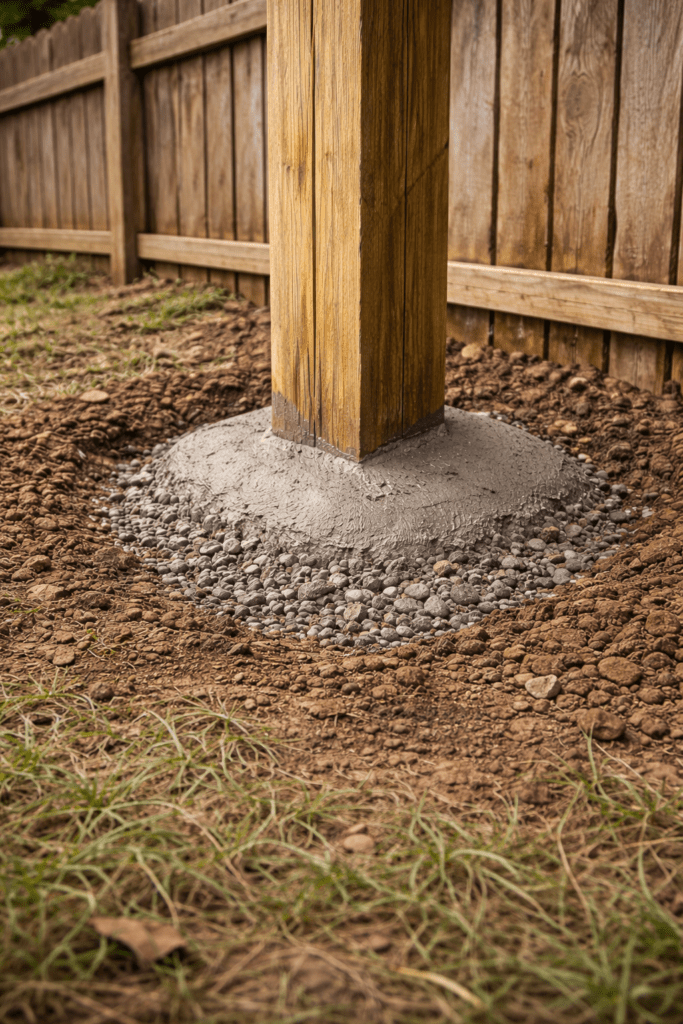
Rocky soil often drains well naturally, but compacted clay mixed with rock can trap water around fence posts.
A gravel drainage layer helps reduce:
- Rot
- Frost movement
- Water pooling
Recommended Method
- Add 4–6 inches of compacted gravel below the post
- Keep the gravel level and compacted
- Use crushed gravel instead of smooth pea gravel for better stability
Many experienced installers prefer combining gravel with concrete rather than using only concrete or only gravel.
Best Use Case
- Wet rocky soil
- Clay-heavy terrain
- Wood fence posts
Time to Complete
- Adds about 10–20 minutes per post
4. Use Fast-Setting Concrete Carefully
Fast-setting concrete saves time in rocky terrain because repeatedly leveling posts on uneven ground can become exhausting. However, rocky holes often create irregular voids.
Important Tip
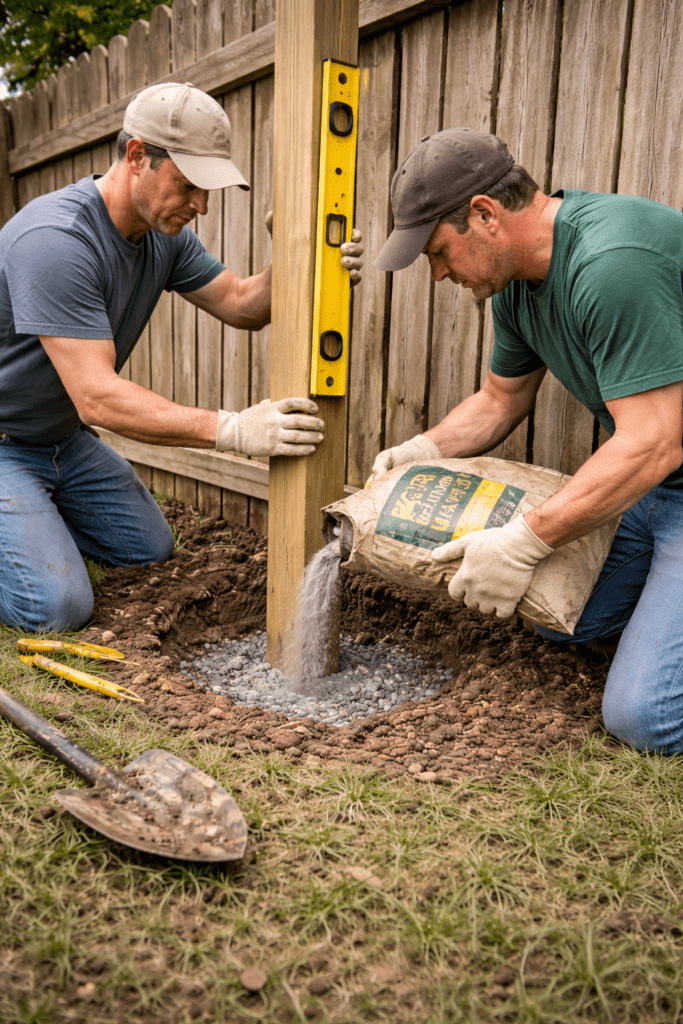
Always tamp concrete carefully around rocks to eliminate air gaps.
Otherwise:
- Posts can wobble later
- Water can collect underground
- Frost movement may increase
Best Use Case
- Windy properties
- Tall privacy fences
- Gate posts
Time to Complete
- 20–40 minutes per post
Concrete generally provides stronger support in high-wind areas, while gravel improves drainage. The best solution often combines both methods.
5. Consider Steel Fence Posts
Rocky soil can actually work extremely well with steel posts.
Steel posts:
- Require smaller holes
- Resist rot
- Handle rocky pressure better
- Work well in narrow drilled holes
This becomes especially helpful if you repeatedly encounter buried rock shelves.
Best Use Case
- Long-term installations
- High-wind areas
- Difficult rocky terrain
Trade-Offs
- Higher upfront cost
- Slightly more industrial installation process
But long term, steel often becomes cheaper because replacement frequency drops dramatically.
6. Move the Fence Post Slightly When Necessary
A lot of homeowners fight one impossible rock for hours when shifting the post location a few inches would solve the problem.
Realistic Expectation
Perfect spacing sometimes matters less than achieving proper depth and stability.
Even professional installers occasionally adjust layouts slightly in rocky terrain.
Best Use Case
- Decorative fences
- Flexible panel spacing
- Non-critical alignment sections
7. Use No-Dig Systems in Extremely Rocky Ground
In some conditions, digging traditional holes becomes unrealistic.
No-dig fence systems use:
- Driven steel supports
- Impact posts
- Post pounders
These systems avoid full excavation entirely.
Advantages
- Much faster installation
- No concrete curing
- Less excavation
Drawbacks
- Not ideal for every fence style
- May struggle in solid bedrock
- Usually higher hardware cost
Still, for some rocky lots, they save enormous labor.
Common Rocky Soil Fence Mistakes
Digging Too Shallow
Rocky ground tempts homeowners to stop early. Fence posts still need proper depth for stability. Most fences require roughly one-third of the post underground.
Using Weak Tools
Cheap augers and light digging tools struggle badly in rocky soil.
Ignoring Drainage
Even rocky terrain can trap water if clay is mixed underneath.
Rushing Concrete
Uneven rocky holes require more careful tamping and leveling.
Printable Rocky Soil Fence Checklist

Before Digging
- Call utility marking service
- Check soil depth
- Rent heavy-duty tools if needed
- Buy extra gravel and concrete
- Plan drainage strategy
During Installation
- Use digging bar first
- Remove loose rocks carefully
- Add gravel drainage layer
- Check post depth repeatedly
- Brace posts while curing
After Installation
- Slope concrete away from post
- Verify alignment after curing
- Inspect drainage after rain
Helpful Products and Tools
Best Tools for Rocky Soil
- Demolition hammer
- Digging bar
- Heavy-duty auger
- Rotary hammer
- Post puller
- Laser level
Helpful Materials
- Crushed gravel
- Fast-setting concrete
- Steel fence posts
- Reinforcement brackets
For additional repair help, see:
Frequently Asked Questions
What is the best way to dig fence posts in rocky soil?
A digging bar combined with a demolition hammer or heavy-duty auger usually works best.
Can you install fence posts without digging in rocky ground?
Yes. No-dig fence systems using driven steel supports can work well in some rocky conditions.
Is gravel or concrete better for rocky soil?
Often a hybrid method works best: gravel for drainage underneath and concrete for upper stability.
How deep should fence posts go in rocky terrain?
Most fence posts still require about one-third of the post length underground for proper support.
Are steel fence posts better in rocky soil?
In many cases yes. Steel posts handle difficult terrain and moisture better long term.
Can I use a jackhammer for fence post holes?
Absolutely. In rocky foothill terrain, jackhammers are often one of the most useful rental tools available.
Conclusion
Rocky soil makes fence projects harder — but not impossible.
The biggest shift is realizing you cannot approach rocky terrain the same way you would soft suburban soil. The right tools, proper drainage, flexible layouts, and realistic expectations make an enormous difference.
In many cases, rocky soil actually creates stronger long-term fence stability once the posts are installed correctly. The key is working with the terrain instead of fighting it.