
Fence posts fail slowly… until one windy day turns a leaning fence into a major problem. I’ve seen homeowners spend hundreds trying to “save” a post that should have been replaced from the beginning, and I’ve also seen perfectly salvageable fences get completely rebuilt when a simple repair would have worked for years.
The tricky part is knowing which situation you’re dealing with.
A fence post can lean because of loose soil, poor drainage, rotted wood, shallow concrete, rusted brackets, frost movement, or old age. Some problems are cosmetic and easy to stabilize. Others mean the structural integrity of the fence is already compromised.
The good news is that many fence post problems can be fixed without replacing the entire fence section. But there are situations where replacement saves money long term.
If you’re trying to decide whether to repair or replace a fence post, this guide will help you compare realistic costs, risks, timelines, and long-term value.
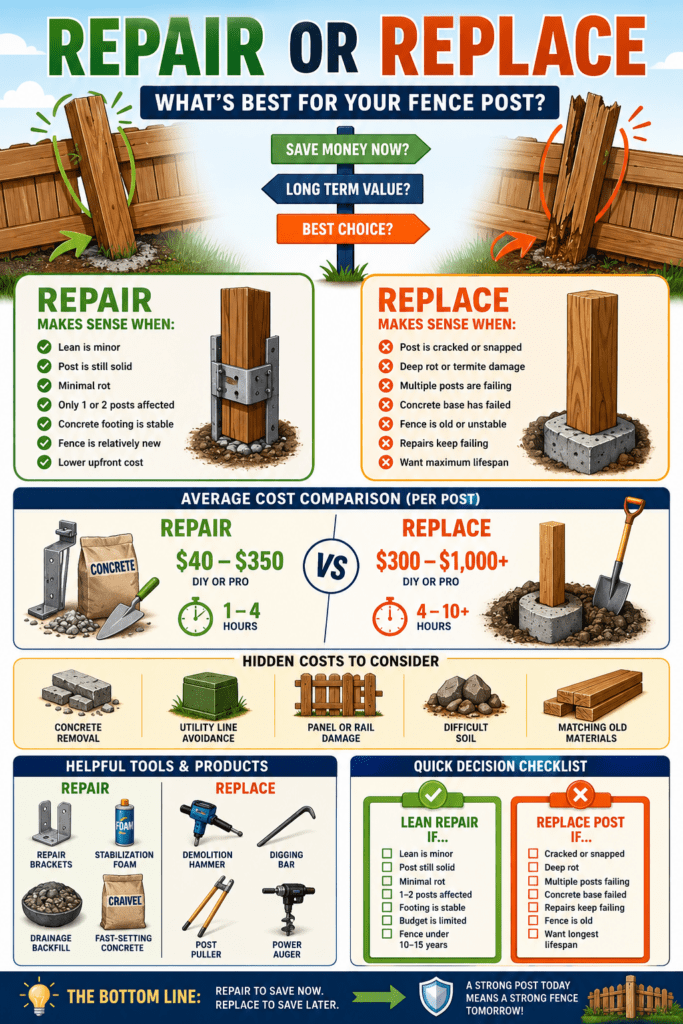
Average Fence Post Repair Costs
Most fence post repairs cost far less than full replacement.
Here’s a realistic breakdown for a single post:
| Repair Type | Average DIY Cost | Professional Cost | Time to Complete |
|---|---|---|---|
| Fence post spike/bracket repair | $40–$120 | $150–$350 | 1–3 hours |
| Concrete reinforcement | $30–$100 | $200–$450 | 2–4 hours |
| Post straightening and bracing | $20–$80 | $150–$300 | 1–2 hours |
| Partial rot repair | $25–$100 | $200–$400 | 2–5 hours |
| Gravel/drainage correction | $50–$150 | $250–$600 | 3–6 hours |
In many cases, a leaning post can be stabilized without removing the old concrete footing. That alone can save a huge amount of labor.
A repair usually makes sense when:
- The fence itself is still in good shape
- The post has minimal rot
- The concrete footing is stable
- Only one or two posts are affected
- The fence is relatively new
If your fence is less than 10 years old and the rails and panels are still solid, repair is often the better value.
Average Fence Post Replacement Costs
Replacement costs rise quickly because labor increases dramatically once you involve digging and concrete removal.
Here’s what most homeowners should realistically expect:
| Replacement Type | Average DIY Cost | Professional Cost | Time to Complete |
|---|---|---|---|
| Replace one wood post | $75–$250 | $300–$800 | 4–8 hours |
| Replace post with concrete removal | $100–$350 | $500–$1,000+ | 6–10 hours |
| Replace multiple fence posts | $250–$900 | $1,000–$3,000+ | 1–3 days |
Rocky soil conditions can increase costs substantially. Digging through compacted rocky ground can easily double labor time.
If contractors need to use jackhammers, demolition hammers, or powered augers, replacement becomes much more expensive.
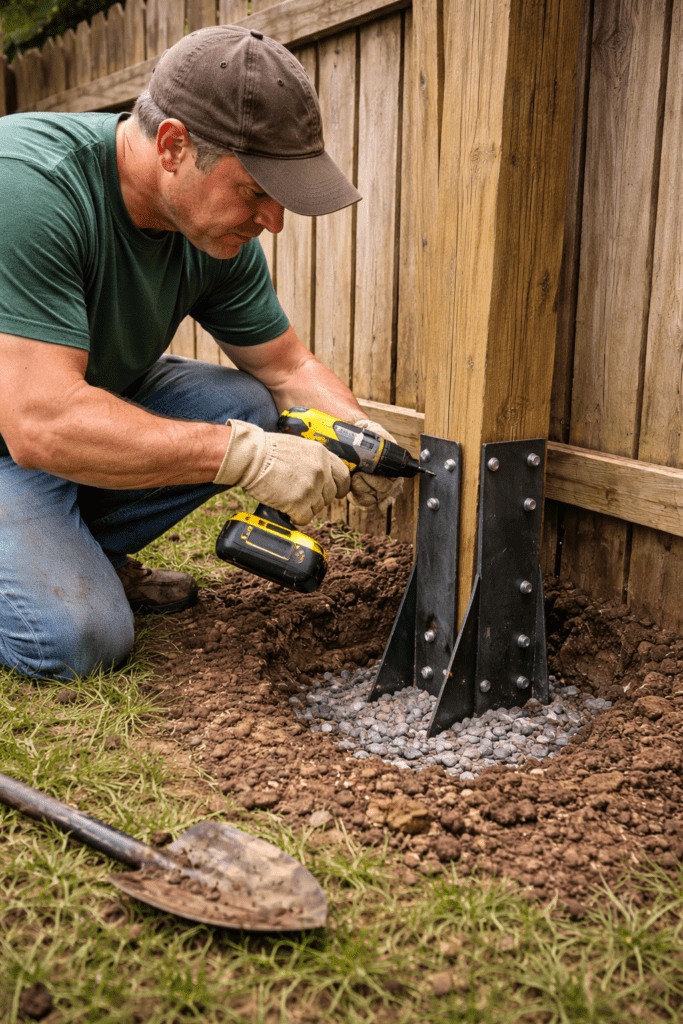
When Repair Makes More Sense
A repair is usually the smarter option when the failure is isolated.
Good Candidates for Repair
- Slight Leaning: If the post only leans a few inches and still feels structurally solid, reinforcement may be enough.
- Loose Soil: Posts in sandy or shifting soil often need stabilization rather than replacement.
- Fence is relatively New: A newer fence with one weak post is worth saving.
- Surface Level Rot: You can ususally reinforce minor rot near the base using repair brackets or splints.
- Wind Movement: Posts that wobble during storms may simply need deeper stabilization.
One of the most overlooked repair methods is improving drainage. Water causes more fence failures than people realize.
If water pools around the base, the repair should include:
- Gravel backfill
- Soil grading
- Drainage correction
- Concrete slope away from the post
Without fixing moisture problems, even a brand-new post may fail again.
For more help with wet ground issues, see:
When Replacement Is the Better Option
Sometimes repair becomes a temporary bandage.
Replace the Post If:
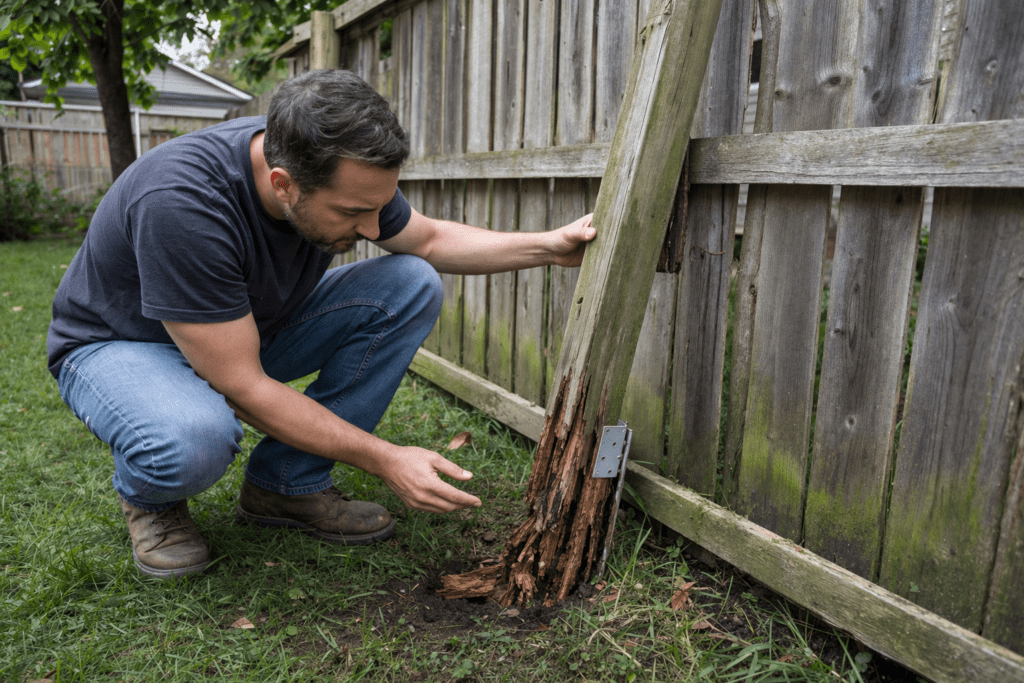
- Wood is Deeply Rotted: If you can push a screwdriver deeply into the base, replacement is usually smarter.
- The Post is Snapped: Cracked or split structural posts rarely regain full strength.
- Multiple Posts are Failing: If several posts lean, the fence may have foundational problems.
- The Fence is Old: Once fences reach 15–20+ years old, repairs often become repetitive.
- Concrete Footing Failed Completely: If the concrete footing has shifted or broken apart underground, replacement is usually unavoidable.
- Termite or Insect Damage Exists: Internal damage weakens the core structure even if the outside looks acceptable.
Trying to repeatedly repair severely compromised posts can actually increase total costs over time.
Fence Post Repair Selector Tool
Choose your fence post conditions below to find the best repair method, estimated cost, and time to complete.
Hidden Costs Homeowners Forget
Fence repairs often look inexpensive at first… until hidden issues appear.
Common Surprise Costs
- Concrete Removal: Old concrete can weigh hundreds of pounds.
- Utility Line Avoidance: Digging near irrigation, electrical, or gas lines slows projects.
- Fence Panel Damage: Removing one post sometimes damages connected rails or panels.
- Soil Conditions: Clay, rocks, roots, and slope increase labor.
- Matching Old Materials: Older fence styles may require custom lumber or hardware.
This is why simple “replace one post” quotes can vary dramatically.
Repair vs Replace: Long-Term Value
Here’s the biggest decision factor:
Choose Repair If:
- You need the lowest short-term cost
- The fence is otherwise healthy
- The problem is isolated
- You want to avoid major digging
Choose Replacement If:
- The fence has widespread deterioration
- Repairs are becoming frequent
- Structural safety matters
- You want maximum lifespan
A properly installed replacement post can last:
- 15–25 years for pressure-treated wood
- 20–40+ years for steel posts
- Even longer with proper drainage
Meanwhile, some repairs may only buy 3–7 additional years depending on conditions.
Printable Fence Post Decision Checklist

Repair the Post If:
- Lean is minor
- Fence panels remain solid
- Rot is minimal
- Only one or two posts affected
- Concrete footing still stable
- You have a limited budget
- Fence is under 10–15 years old
Replace the Post If:
- Post is cracked or snapped
- Deep rot exists
- Multiple posts are failing
- Fence shifts heavily in wind
- Concrete base collapsed
- Repairs keep recurring
- Fence is nearing end of lifespan
Recommended Products and Tools
Helpful tools depend heavily on soil conditions and fence type.
Repair Products
- Fence post repair brackets
- Expanding foam stabilization kits
- Gravel drainage backfill
- Fast-setting concrete mix
- Galvanized reinforcement hardware
Replacement Tools
- Demolition bar
- Post puller
- Rotary hammer or jackhammer
- Heavy-duty digging bar
- Power auger
If you have rocky soil, renting a demolition hammer from The Home Depot or United Rentals can save enormous effort.
Frequently Asked Questions
Is it cheaper to repair or replace a fence post?
Repair is usually cheaper upfront. Most repairs cost under a few hundred dollars, while replacements can reach $800–$1,000+ once concrete removal and labor are involved.
How long does a fence post repair last?
A good repair may last anywhere from 3–10 years depending on moisture, wind exposure, and soil conditions.
Can you repair a rotted fence post without replacing it?
Sometimes. You can often reinforce minor surface rot, but severe internal rot usually requires replacement.
Is replacing one fence post difficult?
It can be surprisingly labor-intensive, especially if the old concrete footing is large or buried deeply.
Should I replace all fence posts at once?
Not necessarily. If most of the fence is still structurally sound, replacing only failed posts can save substantial money.
Are steel fence posts worth it?
In many cases, yes. Steel posts resist rot, insects, and moisture far better than wood.
Additional Resources
- International Association of Certified Home Inspectors
- USDA Wood Durability Guidance
- Family Handyman Fence Repair Guides
Conclusion
The cheapest option is not always the least expensive long term.
A simple stabilization repair can absolutely make sense for a newer fence with isolated movement. But once rot, shifting concrete, or widespread deterioration enters the picture, replacement often becomes the smarter investment.
The key is being realistic about the condition of the entire fence — not just the one leaning post. A properly repaired post can extend fence life for years. A properly replaced post can reset the clock entirely.