
One of the biggest mistakes homeowners make with fence repairs is assuming the actual “repair work” is the entire project timeline.
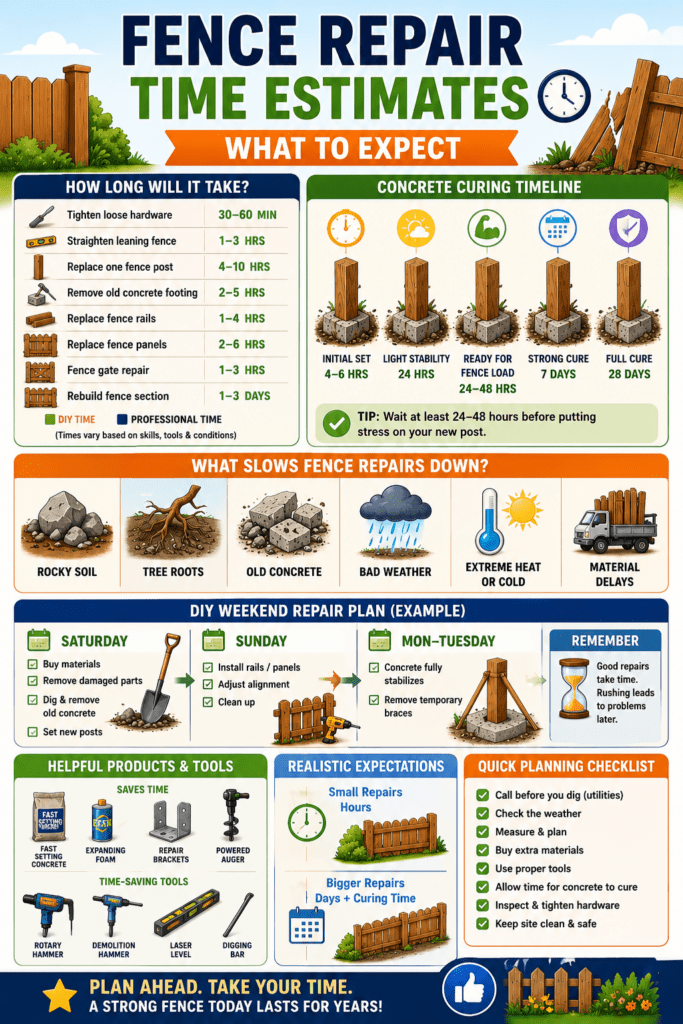
In reality, fence repair jobs are usually a combination of:
- Active labor time
- Concrete curing time
- Material delays
- Weather delays
- Soil and digging complications
I’ve seen people plan a “quick Saturday repair” only to discover they spent half the day removing old concrete or digging through roots and rock. On the other hand, I’ve also seen simple fence fixes take less than an hour when the right tools and repair methods were used.
The truth is that fence repair timelines vary wildly depending on:
- Fence type
- Soil conditions
- Number of damaged posts
- Weather
- Concrete curing
- Access to tools
This guide breaks down realistic fence repair time estimates so you know what to expect before starting. I’ll also cover the hidden delays homeowners rarely think about until they’re already halfway through the project.
Average Fence Repair Time Estimates
Here’s a realistic overview of common repair timelines.
| Fence Repair Type | DIY Time Estimate | Professional Time Estimate |
|---|---|---|
| Tightening loose hardware | 30–60 minutes | 15–30 minutes |
| Straightening leaning fence | 1–3 hours | 1–2 hours |
| Replacing one fence post | 4–10 hours | 2–6 hours |
| Removing old concrete footing | 2–5 hours | 1–3 hours |
| Replacing fence rails | 1–4 hours | 1–2 hours |
| Replacing fence panels | 2–6 hours | 1–3 hours |
| Fence gate repair | 1–3 hours | 30–90 minutes |
| Full fence section rebuild | 1–3 days | 1–2 days |
Concrete curing can extend project timelines significantly. Even quick-setting concrete often requires at least 24–48 hours before heavy stress is applied to the fence.
What Slows Fence Repairs Down?
This is where most time estimates fall apart.
Rocky Soil
Rocky soil is one of the biggest fence repair slowdowns. A repair that should take 2 hours can suddenly become an all-day project if:
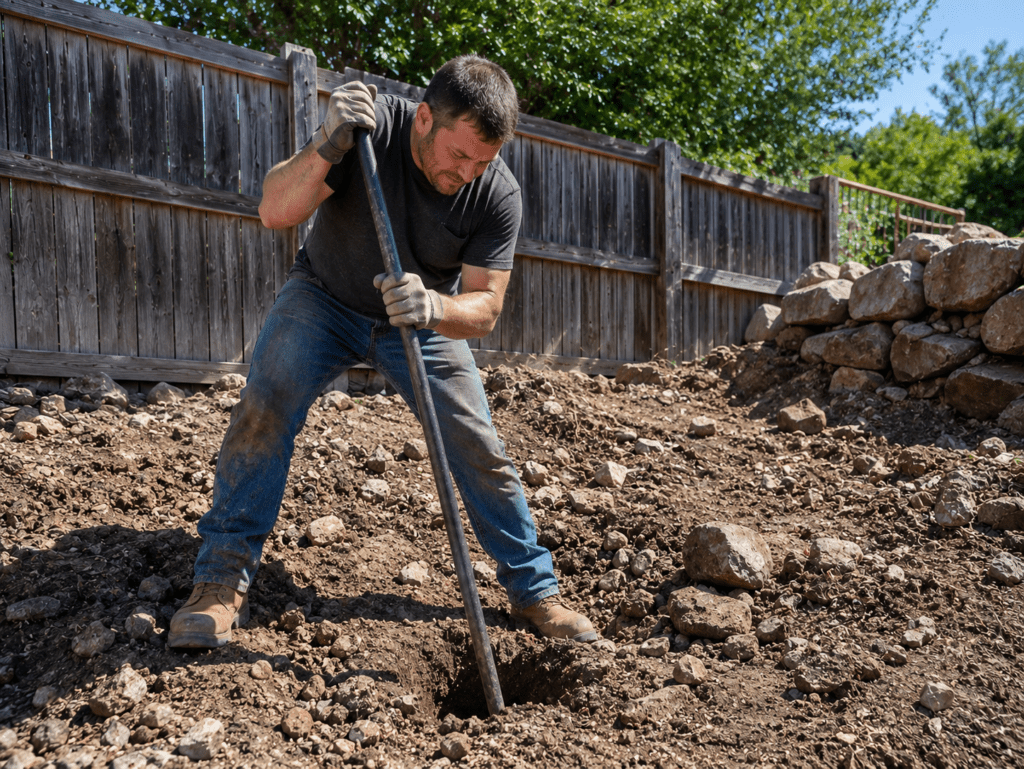
- Large rocks block digging
- Old concrete is oversized
- Tree roots are intertwined
- Clay soil hardens around posts
This is why many homeowners eventually rent:
- Demolition hammers
- Powered augers
- Jackhammers
- Post pullers
For rocky conditions, see:
Concrete Curing Adds More Time Than People Expect
The physical repair itself may be quick, but concrete curing changes the schedule.
Typical Concrete Timeline
| Stage | Approximate Time |
|---|---|
| Initial set | 4–6 hours |
| Light stability | 24 hours |
| Fence load recommended | 24–48 hours |
| Strong cure | 7 days |
| Full cure | 28 days |
Quick-setting concrete speeds things up, but most fence professionals still avoid stressing fresh posts too early.
That means your fence may technically be “installed” in one day but not truly ready for heavy wind or tension immediately afterward.
This becomes especially important for:
- Tall privacy fences
- Heavy gates
- Windy hillside properties
- Wet clay soil
DIY Fence Repairs Usually Take Longer
Most homeowners underestimate setup and cleanup time. The actual repair work is often only part of the process.
Time Is Lost On:
- Driving to buy materials
- Digging out old concrete
- Leveling posts repeatedly
- Mixing concrete
- Hauling debris
- Adjusting fence alignment
- Waiting for concrete
A repair that professionals finish in 2 hours may take a DIY homeowner an entire weekend. That doesn’t mean DIY is a bad idea. It just means expectations should be realistic.
Fastest Fence Repairs
Some repairs are surprisingly quick.
Repairs Often Completed in Under 2 Hours
Loose Hardware Tightening
Replacing screws, brackets, or hinges is usually fast.
Fence Gate Adjustments
Sagging gates are commonly fixed using:
- Anti-sag kits
- New hinges
- Cable tension systems
Fence Bracing
Temporary stabilization braces can sometimes buy several years of additional life.
Minor Leaning Corrections
If the concrete footing remains solid, some leaning posts can be corrected without full replacement. These quicker repairs work best when the fence structure itself is still healthy.
Slowest Fence Repairs
Some projects take dramatically longer than expected.
Repairs That Commonly Become Multi-Day Jobs
- Full Post Replacement: Removing old concrete is often the hardest part.
- Multiple Failed Posts: Fence alignment becomes difficult once several posts move.
- Fence Repairs on Slopes: Hillsides complicate leveling and stabilization.
- Water-Damaged Fence Sections: Rot often extends farther underground than expected.
- Wind-Damaged Fences: Strong storms sometimes shift entire fence runs, not just individual posts.
In windy areas, shallow post depth is a common hidden problem.
Weather Can Delay Fence Repairs
Fence repair schedules depend heavily on weather conditions.
Rain Delays
Wet soil:
- Collapses into holes
- Slows concrete curing
- Makes leveling difficult
Extreme Heat
Concrete can cure too quickly and weaken if not managed properly.
Cold Weather
Low temperatures dramatically slow curing times.
If possible, fence repairs are easiest during mild, dry weather.
Fence Post Repair Selector Tool
Choose your fence post conditions below to find the best repair method, estimated cost, and time to complete.
Realistic DIY Weekend Expectations
If you’re tackling fence repairs yourself, this is a more realistic timeline:
Saturday
- Buy materials
- Remove damaged sections
- Dig holes
- Remove old concrete
- Set new posts
Sunday
- Install rails/panels
- Adjust alignment
- Clean up worksite
Monday–Tuesday
- Concrete fully stabilizes
- Remove temporary braces
Trying to rush everything into one afternoon often leads to crooked posts or weak concrete installation.
Printable Fence Repair Planning Checklist

Before Starting
- Call utility marking service
- Check weather forecast
- Measure fence sections
- Buy extra concrete
- Verify post dimensions
- Gather digging tools
- Plan debris disposal
During Repair
- Check post depth
- Use gravel drainage layer
- Keep posts level
- Brace posts during curing
- Slope concrete away from post
After Repair
- Wait 24–48 hours before stressing fence
- Inspect alignment
- Tighten hardware
- Seal exposed wood if needed
Helpful Products That Save Time
Some products dramatically reduce repair time.
Helpful Repair Products
- Fast-setting concrete mix
- Fence post repair brackets
- Expanding foam stabilizers
- Powered augers
- Post pullers
Helpful Time-Saving Tools
- Rotary hammer
- Demolition hammer
- Mixing drill
- Digging bar
- Laser level
For additional repair methods, see:
Frequently Asked Questions
How long does it take to replace one fence post?
Most single fence post replacements take 4–10 hours for DIY homeowners, depending on soil conditions and concrete removal difficulty.
How long should concrete cure before attaching fence panels?
Most installers recommend waiting at least 24–48 hours before applying significant fence load.
What part of fence repair takes the longest?
Removing old concrete footings is often the slowest and most exhausting part of the project.
Can fence repairs be completed in one day?
Some can. Minor repairs are often finished in a few hours, while larger repairs may take several days including curing time.
Does rocky soil increase repair time?
Absolutely. Rocky or clay-heavy soil can easily double digging and installation time.
Is DIY fence repair worth it?
Usually yes for smaller repairs. But large repairs involving multiple posts or heavy concrete removal may justify hiring professionals.
Additional Resources
- The Home Depot Fence Repair Guide
- International Association of Certified Home Inspectors
- USDA Wood Durability Guidance
Conclusion
Fence repairs almost always take longer than homeowners initially expect — not because the repairs are impossible, but because the hidden work adds up fast.
Digging, leveling, concrete curing, cleanup, rocky soil, and weather delays all affect the timeline.
The smartest approach is to plan for extra time rather than rushing the repair. A properly installed fence post can last decades. A rushed repair often becomes another repair job next season.
If you build extra time into the project from the beginning, the entire repair process becomes far less frustrating — and the results usually look much better too.