
If you’ve ever walked out to your yard and noticed a fence leaning just enough to bother you, you’re not alone. Fence posts fail quietly—usually from rot, shifting soil, or years of weather—and by the time you notice, the whole section can feel unstable.
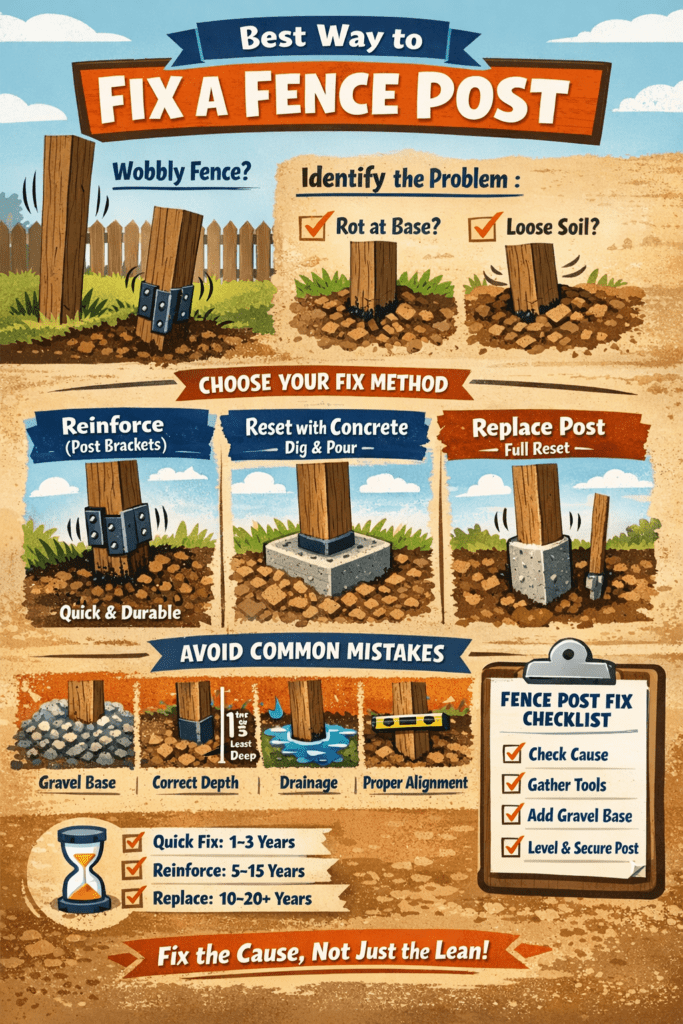
I’ve worked through just about every type of fence repair scenario, from slightly wobbly posts to completely snapped bases. The biggest mistake people make? They either overdo the repair (full replacement when it’s not needed) or underdo it (quick fixes that fail in a few months).
Let’s walk through the smartest way to fix a fence post based on what’s actually happening underground.
Step 1: Identify the Real Problem
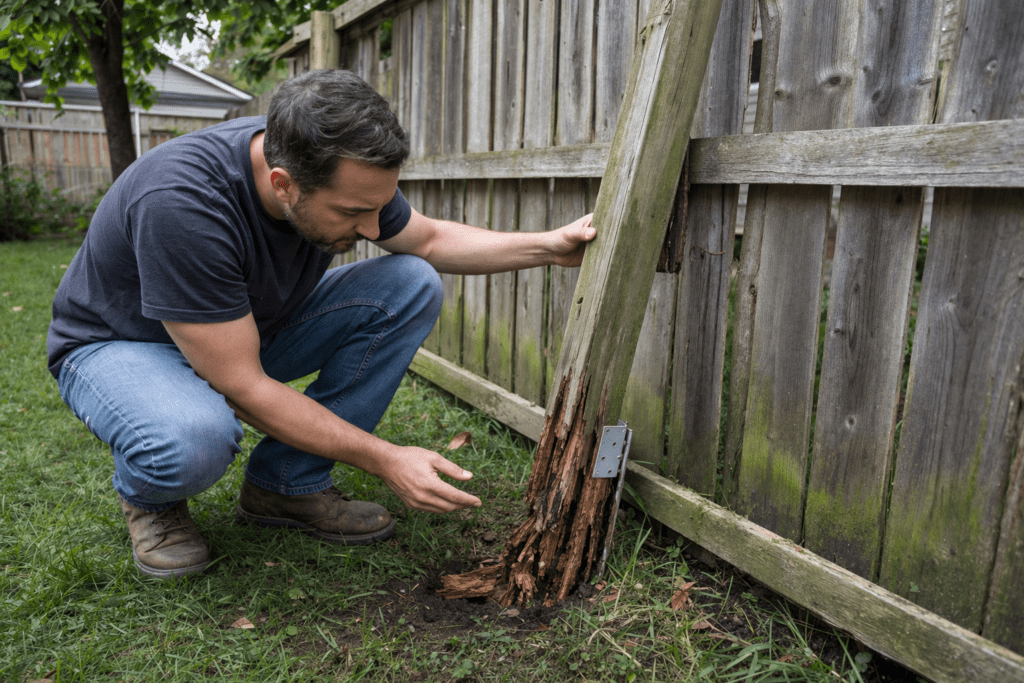
Before you grab tools, take a minute to diagnose the issue. This determines everything.
Common causes:
- Rot at ground level (most common)
- Loose soil or shifting ground
- Broken or cracked post
- Improper original installation (no gravel, shallow depth)
Quick test:
Push the post in different directions.
- Moves at the base → soil issue
- Moves above ground → structural weakness or rot
Step 2: Choose the Right Fix Method
There isn’t one “best” method—it depends on the condition of the post.
Option 1: Reinforce with a Post Repair System (Best Overall)
This is usually the sweet spot between durability and effort.
Use this if:
- The post is rotted at the base but still mostly intact
- You want a long-term fix without replacing the post
How it works:
- Drive steel supports into the ground alongside the post
- Bolt or secure them to stabilize the existing post
👉 See: Fence Post Repair Methods Comparison
https://www.fencepostfix.com/fence-post-repair-methods/
Time to complete: 1–2 hours per post
Trade-offs:
- ✅ Fast, no digging required
- ✅ Long-lasting if installed correctly
- ❌ Slightly visible hardware
Option 2: Reset the Post with New Concrete
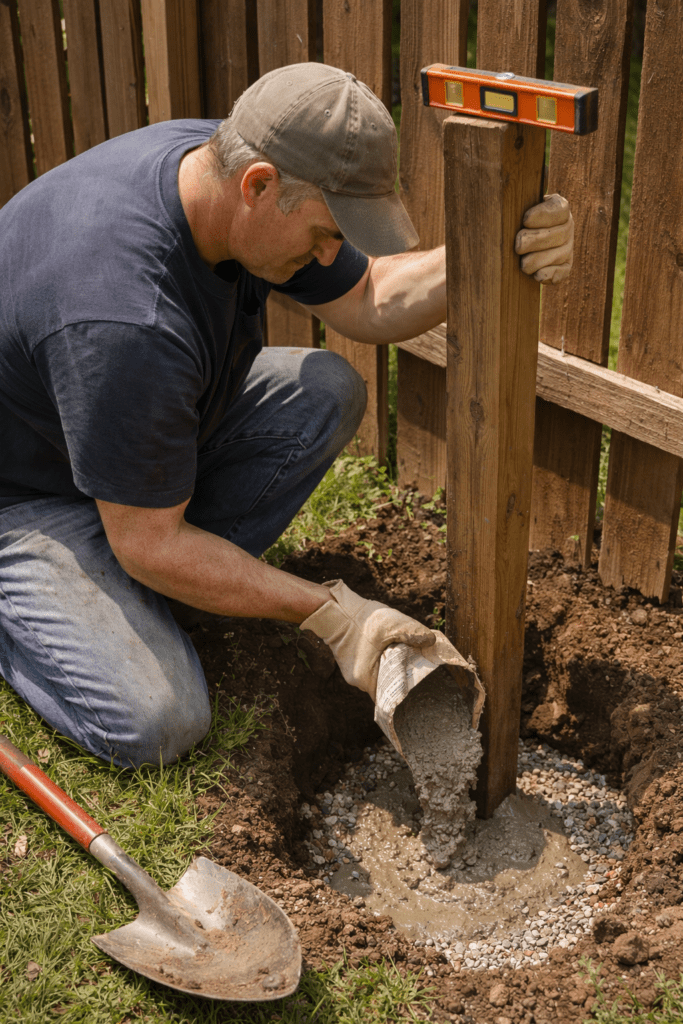
This is a classic method—but not always the best.
Use this if:
- The post is loose but not rotted
- You’re okay with digging
Steps:
- Remove surrounding soil/concrete
- Straighten the post
- Add gravel at the base (critical)
- Pour new concrete and level
👉 See: How to Reset a Fence Post Without Replacing It
https://www.fencepostfix.com/reset-fence-post/
Time to complete: 2–4 hours (plus cure time)
Trade-offs:
- ✅ Strong and stable
- ❌ Labor-intensive
- ❌ Doesn’t fix rot (just delays failure)
Option 3: Replace the Post (Full Reset)
Sometimes you just have to start fresh.
Use this if:
- The post is severely rotted or broken
- The fence is leaning across multiple sections
Steps:
- Remove old post completely
- Dig 24–36 inch hole
- Add gravel base
- Install new post with concrete or compacted soil
👉 See: Fence Post Installation Guide
https://www.fencepostfix.com/install-fence-post/
Time to complete: 3–5 hours per post
Trade-offs:
- ✅ Longest lifespan
- ❌ Most work
- ❌ Can disrupt fence alignment
Step 3: Avoid the Mistakes That Cause Repeat Failures
This is where most DIY repairs fall apart.
Critical things to get right:
- Gravel base (2–4 inches): prevents water pooling → reduces rot
- Proper depth: at least 1/3 of post height underground
- Drainage: don’t trap water with concrete alone
- Alignment: brace the post while setting
👉 See: Why Fence Posts Rot (And How to Prevent It)
https://www.fencepostfix.com/why-fence-posts-rot
Realistic Expectations (What Most People Don’t Tell You)
- A “quick fix” usually lasts 1–3 years
- A proper repair system can last 10+ years
- Full replacement is overkill for 50% of cases
- Soil type matters more than people think (clay vs sandy soil)
If you’re dealing with multiple failing posts, it’s usually a system issue—not just one bad post.
Printable Fence Post Fix Checklist

Before You Start:
- Identify cause (rot, loose soil, break)
- Check surrounding posts for similar issues
- Choose repair method (reinforce, reset, replace)
Tools & Materials:
- Level
- Shovel or post hole digger
- Gravel
- Concrete (if needed)
- Repair brackets or stakes
- Drill/bolts
During Repair:
- Ensure post is perfectly vertical
- Add gravel base for drainage
- Secure post before finishing
After Repair:
- Check stability after 24 hours
- Inspect after first rain
Frequently Asked Questions
What is the cheapest way to fix a fence post?
Reinforcing with stakes or a repair kit is usually the cheapest and fastest option. It avoids digging and concrete costs.
Can I fix a fence post without removing it?
Yes—and in many cases, that’s the best approach. Reinforcement systems are designed specifically for this.
How long does a repaired fence post last?
- Reinforced: 5–15 years
- Reset in concrete: 3–10 years
- Fully replaced: 10–20+ years
Is concrete necessary for fence posts?
Not always. In fact, posts set with gravel and compacted soil often last longer because they drain better.
Why do fence posts rot at ground level?
That’s where moisture sits the longest. Poor drainage and trapped water accelerate decay.
Recommended Tools & Products
- Steel fence post repair brackets (best for reinforcement)
- Fast-setting concrete (for resets)
- Crushed gravel (essential for drainage)
- Post level tool (makes alignment much easier)
👉 See: Best Fence Post Repair Kits (Budget to Pro)
https://www.fencepostfix.com/compare-fence-post-fixings/
Conclusion
If you want the best overall method, reinforcing the existing post with a repair system is the smart move for most situations. It’s fast, durable, and avoids unnecessary digging.
Full replacement has its place—but it’s often more work than needed.
The key is simple:
Fix the cause (moisture + movement), not just the symptom (leaning).
Do that right, and your fence won’t just stand up straight—it’ll stay that way for years.