
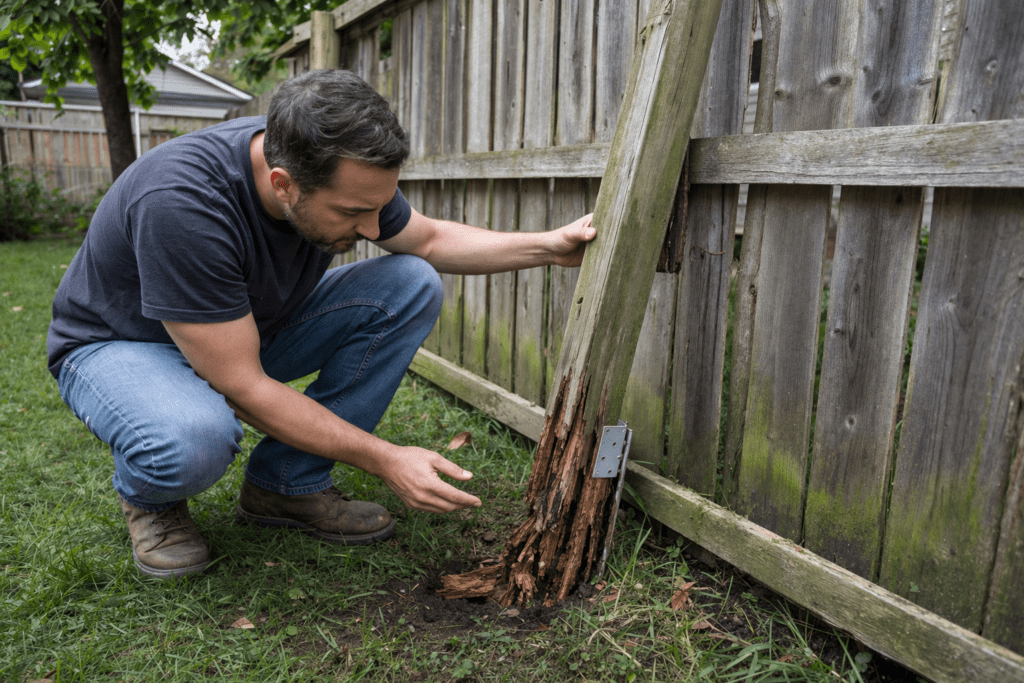
If you’ve dealt with a leaning fence, chances are you’ve already seen the real culprit: rot right at ground level. It’s one of the most frustrating things about fences—you can have perfectly good wood above ground, but the part you can’t see is slowly failing.
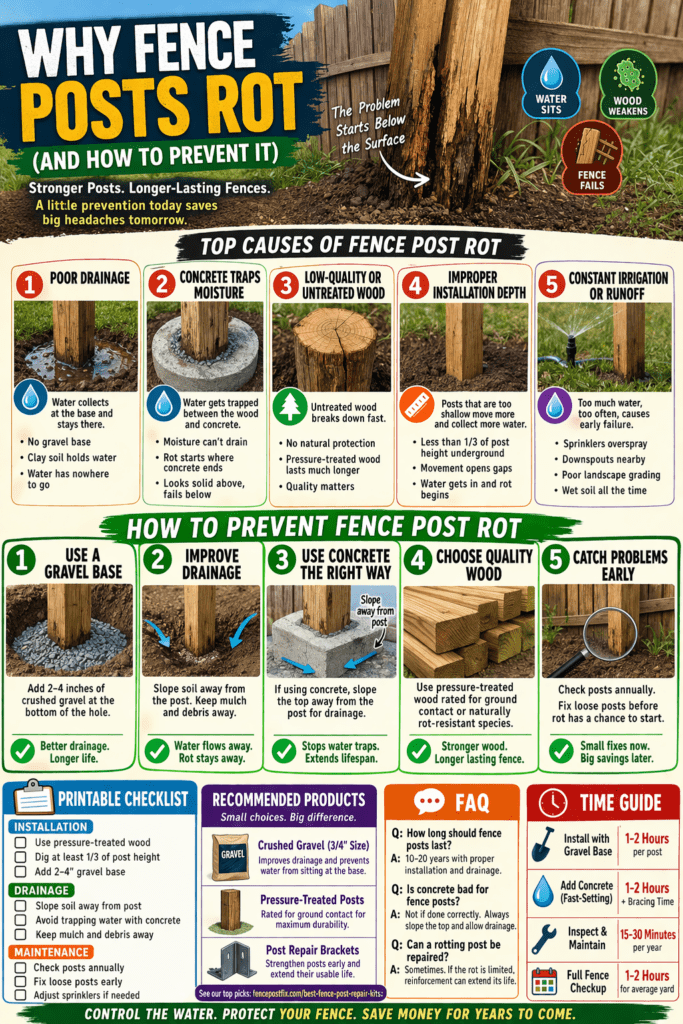
After working through a lot of fence repairs, I can tell you this: fence posts don’t fail randomly. They fail for predictable reasons, and once you understand those, you can prevent it from happening again.
Let’s break down exactly why fence posts rot—and what actually works to stop it.
The Real Reason Fence Posts Rot
Most people assume it’s just “weather” or “rain,” but that’s only part of the story.
The real issue is constant moisture exposure at the soil line.
Why the base is the weak point:
- Water collects and lingers at ground level
- Oxygen + moisture = perfect conditions for decay fungi
- Soil traps moisture against the wood
- Temperature swings accelerate breakdown
Above ground, posts dry out. Below ground, they stay damp.
That transition zone? That’s where rot thrives.
Top Causes of Fence Post Rot
1. Poor Drainage Around the Post
This is the biggest one—and the most fixable.
If water can’t drain away from the base, it sits there and slowly breaks down the wood.
Common mistakes:
- No gravel base
- Clay-heavy soil that holds water
- Concrete poured without drainage slope
👉 See: How to Reset a Fence Post Without Replacing It
https://www.fencepostfix.com/reset-fence-post/
2. Concrete Traps Moisture
This surprises a lot of people.
Concrete seems like it should protect the post—but if installed incorrectly, it actually makes things worse.
What happens:
- Water runs down the post
- Gets trapped between wood and concrete
- Has nowhere to go
Over time, the post rots right where the concrete ends.
3. Low-Quality or Untreated Wood
Not all posts are created equal.
- Untreated wood can start rotting within a couple of years
- Even pressure-treated wood eventually breaks down
If you’re installing new posts, this is one area you don’t want to cut corners on.
4. Improper Installation Depth
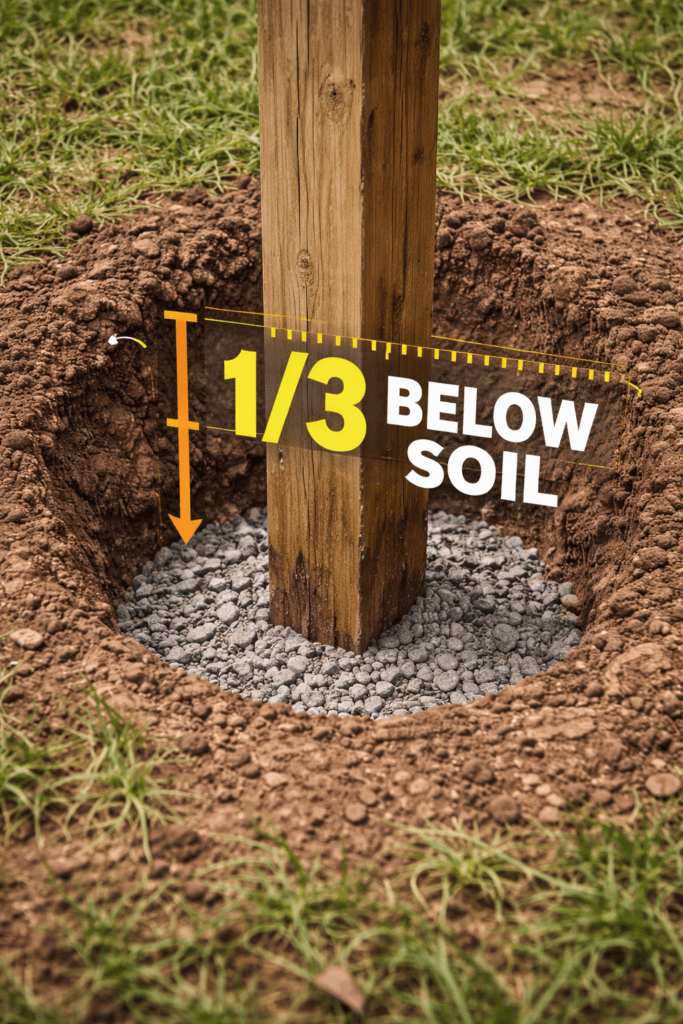
Posts that are too shallow tend to move more—and movement allows water to seep in.
Rule of thumb:
- At least 1/3 of the post height should be underground
Shallow posts = instability + moisture exposure.
5. Constant Irrigation or Runoff
This is an overlooked one, especially in landscaped yards.
- Sprinklers hitting the same spot daily
- Downspouts draining near fence lines
- Overwatering nearby plants
Even a well-installed post can fail if it’s constantly wet.
How to Prevent Fence Post Rot
Now let’s talk solutions—the part that actually saves you time and money long-term.
1. Start with a Gravel Base (Non-Negotiable)
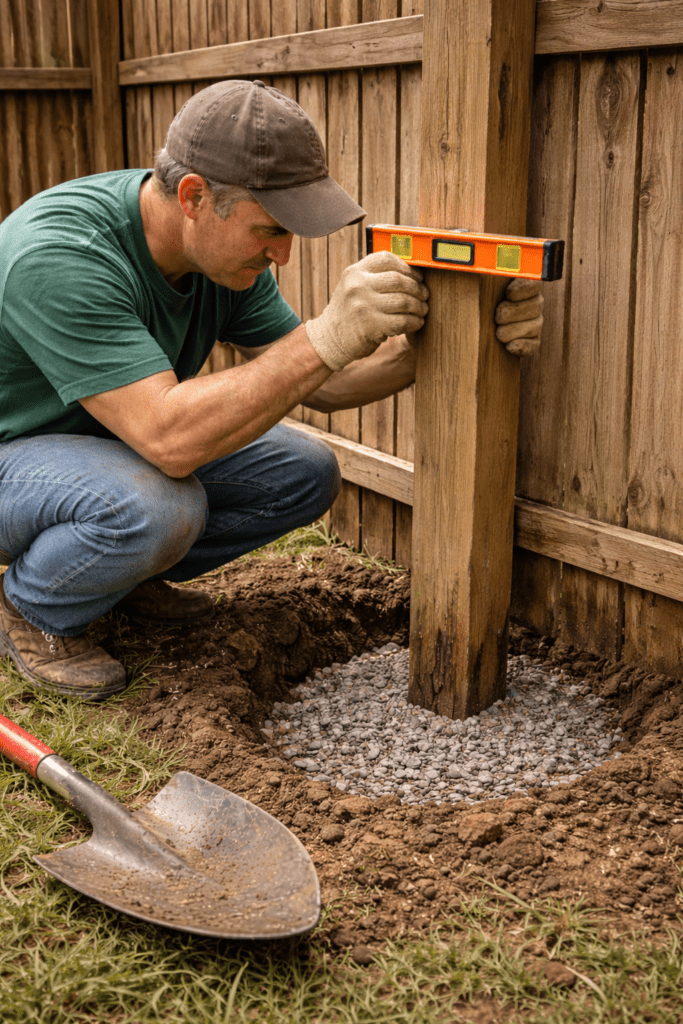
If you do one thing right, make it this.
- Add 2–4 inches of crushed gravel at the bottom of the hole
- This allows water to drain away from the post
👉 See: Fence Post Installation Guide
https://www.fencepostfix.com/install-fence-post/
2. Improve Drainage Around the Post
- Slope soil slightly away from the post
- Avoid creating “water pockets”
- Keep mulch and debris away from the base
3. Use Concrete Carefully (Or Skip It)
If you use concrete:
- Don’t fully encase the base without drainage
- Slope the top surface away from the post
In many cases, gravel + compacted soil performs just as well and lasts longer.
4. Choose the Right Wood
- Use pressure-treated posts rated for ground contact
- Consider naturally rot-resistant species (like cedar)
5. Fix Problems Early
A slightly loose post is much easier to fix than a rotted one.
👉 See: Fence Post Repair Methods Comparison
https://www.fencepostfix.com/fence-post-repair-methods/
Realistic Expectations
Even with perfect installation, fence posts don’t last forever.
- Average lifespan: 10–20 years
- Poor drainage conditions: 3–7 years
- Well-installed with proper drainage: 15+ years
If you’re seeing posts fail early, it’s almost always a drainage issue—not bad luck.
Printable Fence Post Rot Prevention Checklist

Installation:
- Use pressure-treated wood
- Dig proper depth (1/3 of post height)
- Add 2–4 inches of gravel base
Drainage:
- Ensure water flows away from post
- Avoid trapping water with concrete
- Keep mulch away from base
Maintenance:
- Check posts annually for movement
- Fix loose posts early
- Adjust sprinklers if needed
Product Recommendations
- Crushed gravel (¾” size for best drainage)
- Pressure-treated fence posts (ground-contact rated)
- Post repair brackets (for early intervention)
👉 See: Best Fence Post Repair Kits (Budget to Pro)
https://www.fencepostfix.com/compare-fence-post-fixings/
Frequently Asked Questions
Why do fence posts rot faster at ground level?
Because that’s where moisture stays the longest. It’s the perfect environment for decay.
Does concrete prevent fence post rot?
Not always. If installed incorrectly, it can trap water and speed up rot.
Is gravel better than concrete for fence posts?
For drainage, yes. Gravel helps prevent water buildup, which is the main cause of rot.
How can I tell if my fence post is starting to rot?
Look for:
- Soft wood near the base
- Leaning or movement
- Cracking or flaking
Can a rotting fence post be repaired?
Sometimes. If the rot is limited, reinforcement systems can extend its life.
Resources for More Information
- International Society of Arboriculture (ISA): https://www.isa-arbor.com
- U.S. Consumer Product Safety Commission (CPSC): https://www.cpsc.gov
Conclusion
Fence post rot isn’t random—it’s predictable and preventable.
The biggest takeaway:
Water is the enemy. Control moisture, and you control the lifespan of your fence.
Focus on drainage, proper installation, and early fixes, and you’ll avoid the cycle of constant repairs. Do it right once, and your fence will stay solid for years instead of slowly failing from the ground up.